Deck and Patio Inspections: How to Ensure Outdoor Spaces Are Safe and Sound
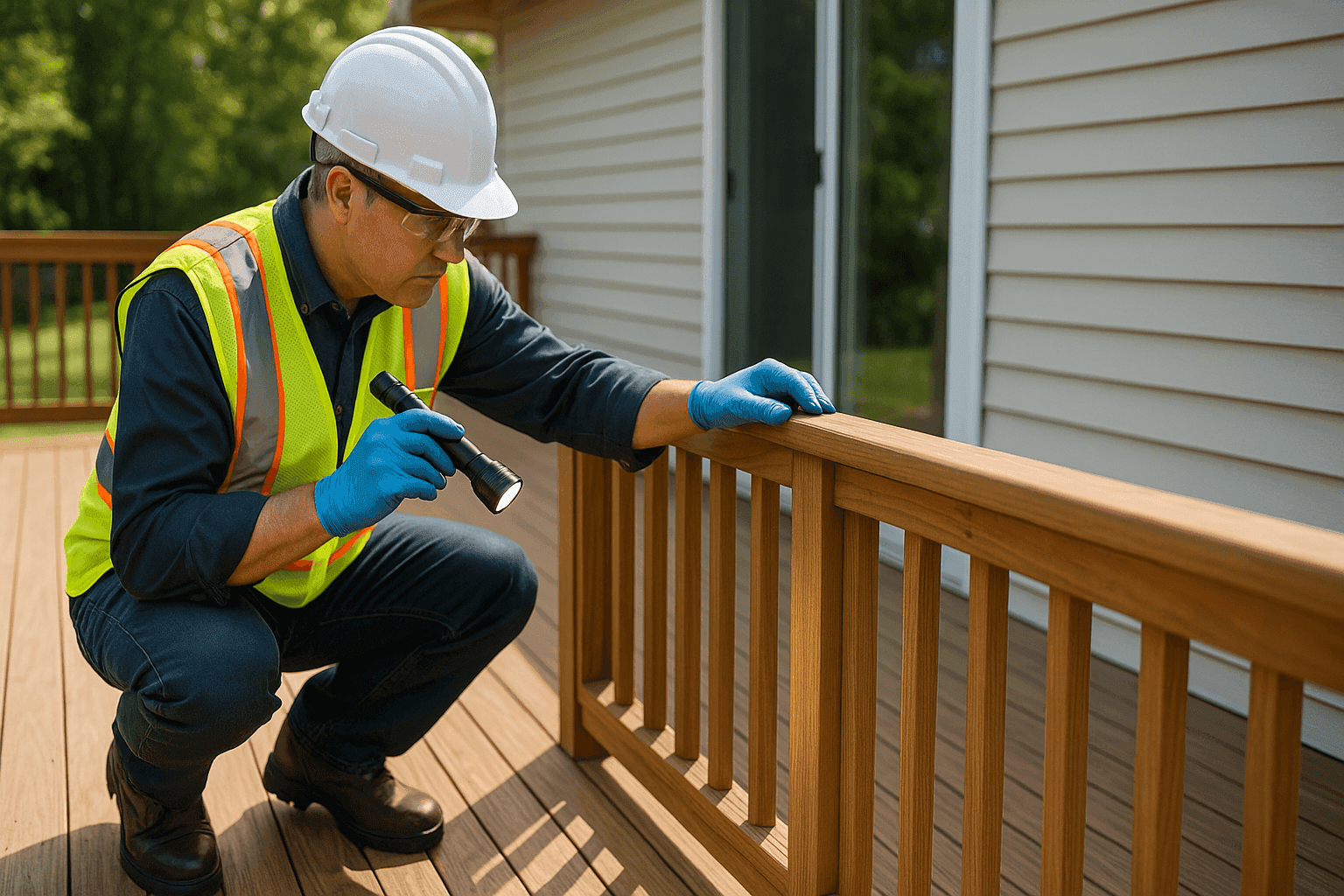
Your deck or patio is where summer stories get made. It’s the stage for backyard barbecues, birthday parties, or simple Sunday afternoons. But what if the very boards beneath your feet aren’t as safe as they seem?
At HiTech Inspect, we believe that a solid, secure outdoor space is just as critical as any foundation. Let’s walk through how a deck or patio inspection can keep your gatherings worry-free—and your home’s value intact.
The Problem: Why Deck and Patio Safety Can’t Wait
Wood, metal, concrete—they all age. Weather, foot traffic, and time quietly do their work. Nails loosen. Boards warp. Moisture creeps in. Suddenly, that inviting space can turn risky.
According to the North American Deck and Railing Association, thousands of decks collapse each year in the U.S., often with preventable injuries. It doesn’t take much—a loose railing, a hidden patch of rot, or a single unstable support.
Quick Safety Checklist 🧐
Before your next gathering, give your deck or patio a five-minute once-over:
- Push and pull on railings—do they wobble or shift?
- Look for soft spots in wood—signs of rot or insect damage.
- Scan for popped nails, loose screws, or protruding fasteners.
- Check stairs and steps for cracks or unevenness.
- Notice any leaning, sagging, or obvious settling.
- Feel for slippery patches (algae, moss, or mildew).
- Examine base supports for erosion or shifting soil.
- Inspect patio slabs for trip hazards—like cracks or uneven edges.
If anything feels off, don’t ignore it. Small issues can snowball into safety hazards.
DIY vs. Call a Pro
Some fixes are simple: tightening a loose screw or clearing off slippery leaves. But when it comes to structural integrity—like hidden rot, support posts, or deck footings—it’s easy to miss problems lying below the surface.
A trusted home_inspection service like HiTech Inspect brings years of experience and specialized tools. Think of it like seeing beneath the skin of your home—infrared cameras, moisture meters, and even Sewer Scope Inspection near you for patio drains.
What Pros Do On Arrival
When a HiTech Inspect professional steps onto your deck or patio, here’s what happens next:
Structural Inspection Steps
- Support Posts & Footings: We check for rot, shifting, cracking, or sinking. Wobbly posts are a red flag.
- Ledger Board: This is where the deck attaches to your home. Improper attachment is a leading cause of collapses.
- Joists & Beams: Are they sagging? Cracked? Properly spaced and securely fastened?
- Decking Boards: We probe for hidden rot, insect damage, or splintering.
- Railings & Balusters: All should withstand at least 200 pounds of lateral force, per International Residential Code (IRC) guidelines.
- Stairs & Landings: Each step must be level, secure, and slip-resistant.
- Fasteners & Connectors: Rust, corrosion, or missing pieces signal trouble.
- Patio Surfaces: We check for heaving, settling, or water pooling that can cause slips or falls.
- Drainage: Proper water flow is vital to prevent long-term damage.
This isn’t just a visual check. We use moisture meters, probe tools, and sharp eyes trained by years in the field.
Common Deck Hazards (and How to Spot Them)
- Loose Railings: Push against all railings. Any movement means the fasteners may be failing.
- Wood Rot: Take a screwdriver and gently press into suspect areas. Wood should be firm, not spongy.
- Unstable Supports: Look beneath—do posts rest directly on soil? Are there signs of shifting or tilting?
- Trip Hazards: Uneven steps, lifted boards, and cracked pavers can all send someone sprawling.
Even the smallest sign—like rust on a bolt or a hairline crack—can be a clue. Every deck tells a story. The trick is knowing how to read it.
Seasonal Safety Checks 🌦️
Outdoor spaces work hardest when you use them most. Here’s how to keep them ready, season after season:
Spring
- Sweep away debris and leaves—these trap moisture and hide hazards.
- Check for winter damage: frost heave can shift posts or crack slabs.
- Inspect all fasteners and tighten as needed.
Summer
- Before a big gathering, run that safety checklist.
- Add anti-slip strips or mats if surfaces get slick in humidity.
- Watch for sun damage—UV rays can weaken finishes and dry out wood.
Fall
- Clear gutters and downspouts near decks to prevent water backup.
- Look for pooling water or clogged drains on patios.
- Apply a fresh coat of sealant to wooden surfaces.
Winter
- Avoid piling heavy snow on decks; it can stress the structure.
- Remove ice promptly with a plastic shovel (metal can gouge wood).
- Inspect for ice dams or water pooling near supports.
Prevention & Maintenance
A little regular care goes a long way. Here are tips to extend your deck or patio’s life:
- Seal wood surfaces every 2–3 years (per manufacturer or lumberyard guidelines).
- Tighten bolts and screws annually.
- Trim back plants and shrubs. Overgrowth traps moisture and invites insects.
- Keep furniture and planters moving. Stationary items can cause discoloration and trap moisture.
- Schedule a professional home_inspection every few years, or after major storms.
Costs & Time Factors
Inspections vary depending on the size, materials, and age of your deck or patio. Most residential deck and patio inspections take 1–2 hours. Material repairs can range from minor fastener tightening to full board or railing replacement.
Remember, the cost of prevention is almost always less than the cost (and risk) of an emergency repair—or worse, an accident.
When It’s an Emergency 🚨
Certain signs mean it’s time to act—immediately:
- You notice a sudden tilt or sag in your deck or patio.
- Railings or stairs detach, wobble, or collapse.
- You find visible, deep cracks in support posts or beams.
- Water is pooling near supports after heavy rain.
In these cases, rope off the area and call a professional right away. Don’t risk injury.
FAQ
How often should I have my deck or patio inspected?
We recommend a professional home_inspection every 2–3 years, or immediately after severe weather or a noticeable change in structure.
What’s the most common cause of deck failure?
Improper attachment to the home (ledger board issues) and undetected wood rot are leading causes, according to the International Residential Code (IRC) and North American Deck and Railing Association.
Can I inspect my own deck or patio?
You can spot basic issues, but only a trained professional can assess structural integrity, hidden rot, or code compliance. For new home buyers, always include a deck and patio check in your Pre-Purchase Home Inspection.
Do all decks and patios need permits?
Most major repairs or rebuilds do require permits. Always check your local building department for code requirements.
Local & Seasonal Considerations
Climate matters. In humid areas, wood rot and mold are bigger threats. In dry regions, UV damage can split and weaken boards. Freeze-thaw cycles in cold climates can shift foundations. If you’re considering a Septic System Inspection near you, it’s wise to check outdoor areas for drainage that could affect both systems.
High-traffic months—summer and holidays—demand special vigilance. That’s when small issues can become big problems, fast.
Safe, sturdy outdoor spaces aren’t just for show. They’re for laughter, memories, and peace of mind. For a thorough home_inspection or deck and patio assessment, Call HiTech Inspect now — or reach us anytime at 844-484-8363 .